Innovation Description
The
traditional knowledge holder has suggested treatment for bacillary dysentery.
Disease symptoms: Fever, diarrhoea, abdominal cramps, nausea, vomiting.
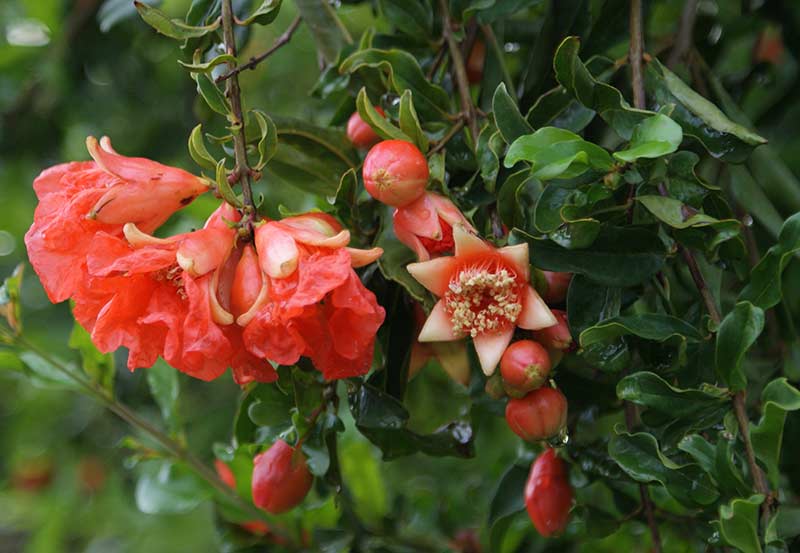
Ingredients: 1-2 fruits of Punica granatum L., 1-2 g seeds of Kasakasa (Papaver somniferum L.) and 10-20 g leaves of Thottachinungi (Mimosa pudica L.).
Preparation: Collect the fruit peel from the fruits. Collect, wash and boil the plant parts in water to prepare a decoction.
Dosage/Application: Consume the prepared decoction once daily till cure.
Ingredients' availability: The plants are available in nearby places.
Suggested Reading(s):
Das, A., Mandal, S., Banerjee, S.,
Sinha, S., Das, J., Saha, B., & Pal, M. (1999). Studies on antidiarrhoeal
activity of Punica granatum seed extract in rats. Journal of
Ethnopharmacology, 68(1-3), 205-208.
Joseph, B., George, J., & Mohan,
J. (2013). Pharmacology and traditional uses of Mimosa pudica. International
Journal of Pharmaceutical Sciences and Drug Research, 5(2), 41-44.
Khare, C. P. (2008). Indian
medicinal plants: an illustrated dictionary. Verlag, Berlin/Heidelberg:
Springer Science & Business Media.
Mani, D., & Dhawan, S. S.
(2011). Scientific basis of therapeutic uses of Opium Poppy (Papaver
somniferum) in Ayurveda. International Symposium on Papaver, 1036,
175-180.
Muhammad, G., Hussain, M. A.,
Jantan, I., & Bukhari, S. N. A. (2016). Mimosa pudica L., a
high?value medicinal plant as a source of bioactives for pharmaceuticals. Comprehensive
Reviews in Food Science and Food Safety, 15(2), 303-315.
Qnais, E., Elokda, A., Abu Ghalyun,
Y., & Abdulla, F. (2007). Antidiarrheal activity of the aqueous extract
of Punica granatum (Pomegranate) peels. Pharmaceutical Biology,
45(9), 715-720.