Innovation Description
The traditional knowledge holder has suggested treatment for diabetes.
Disease symptoms: Weakness, frequent urination, weight loss, slow healing wounds
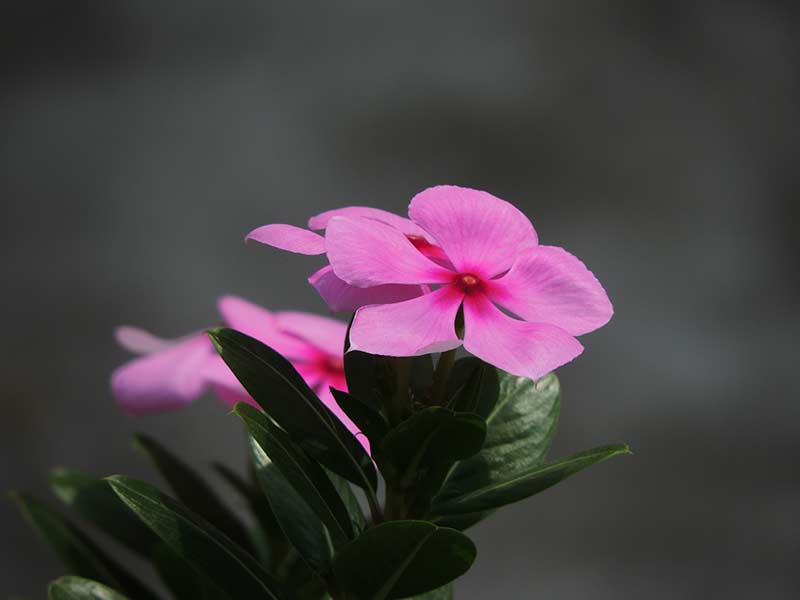
(
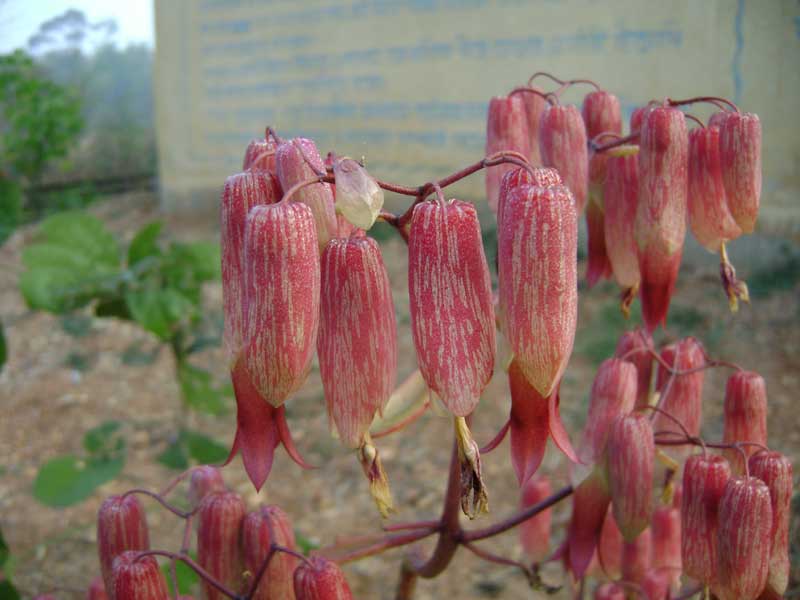
Catharanthus roseus (L.) G.Don), 5 nos leaves of Pate Gaja (
Kalanchoe pinnata (Lam.) Pers.), 15 nos leaves of Nemu (
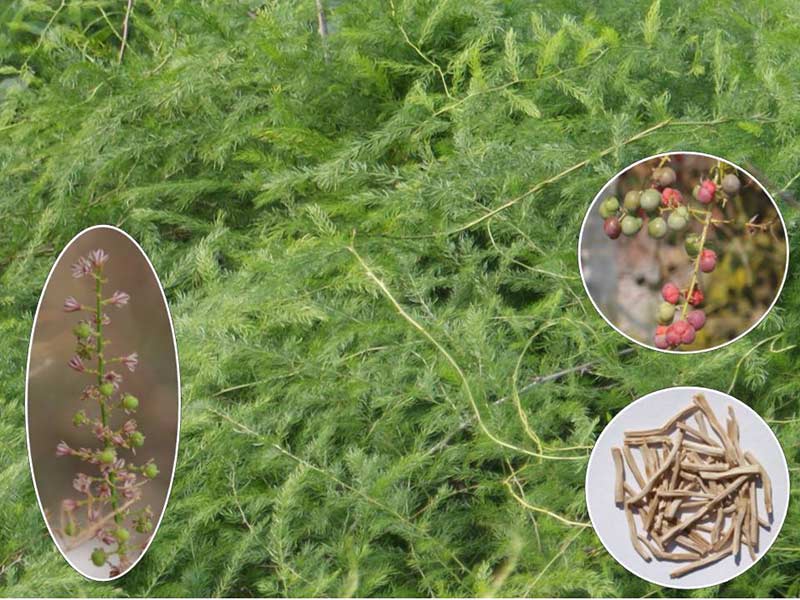
Citrus x aurantifolia (Christm.) Swingle), 2 nos root of Satmal (
Asparagus racemosus Willd.), Salt.
Preparation: Crush the plant parts and collect the juice then add a pinch of salt in it.
Dosage/Application: Consume 1 cup juice once a
day till it cures.Ingredients' availability: The plant is available in nearby
places. Salt is available in local markets.
Suggested Reading(s):
Al-Shaqha, W. M., Khan, M., Salam, N., Azzi, A., & Chaudhary, A. A. (2015). Anti-diabetic potential of Catharanthus roseus Linn. and its effect on the glucose transport gene (GLUT-2 and GLUT-4) in streptozotocin induced diabetic wistar rats. BMC Complementary and Alternative Medicine, 15(1), 1-8.
Nammi, S., Boini, M. K., Lodagala, S. D., & Behara, R. B. S. (2003). The juice of fresh leaves of Catharanthus roseus Linn. reduces blood glucose in normal and alloxan diabetic rabbits. BMC Complementary and Alternative Medicine, 3(1), 4.
Patil, S. B., Dongare, V. R., Kulkarni, C. R., Joglekar, M. M., & Arvindekar, A. U. (2013). Antidiabetic activity of Kalanchoe pinnata in streptozotocin-induced diabetic rats by glucose independent insulin secretagogue action. Pharmaceutical Biology, 51(11), 1411-1418.
Ramya, S., Narayanan, V., Ponnerulan, B., Saminathan, E., & Veeranan, U. (2020). Potential of peel extracts of Punica granatum and Citrus aurantifolia on alloxan-induced diabetic rats. Beni-Suef University Journal of Basic and Applied Sciences, 9(1), 1-11.
Vadivelan, R., Krishnan, R. G., & Kannan, R. (2019). Antidiabetic potential of Asparagus racemosus Willd leaf extracts through inhibition of ?-amylase and ?-glucosidase. Journal of Traditional and Complementary Medicine, 9(1), 1-4.