Innovation Description
The traditional knowledge holder has suggested treatment for diarrhoea.
Disease symptoms: Frequent loose and watery motion, weakness, vomiting, nausea.
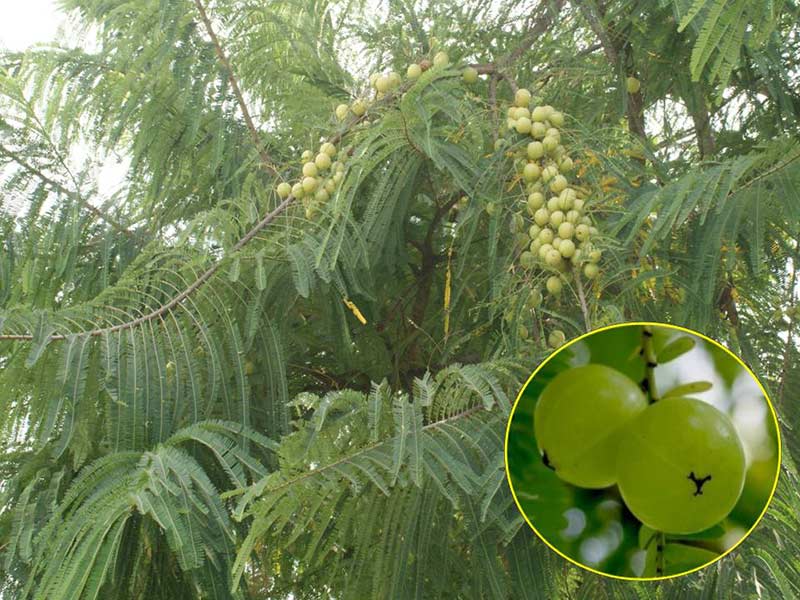
Ingredients: 1 fruit of Amloki (
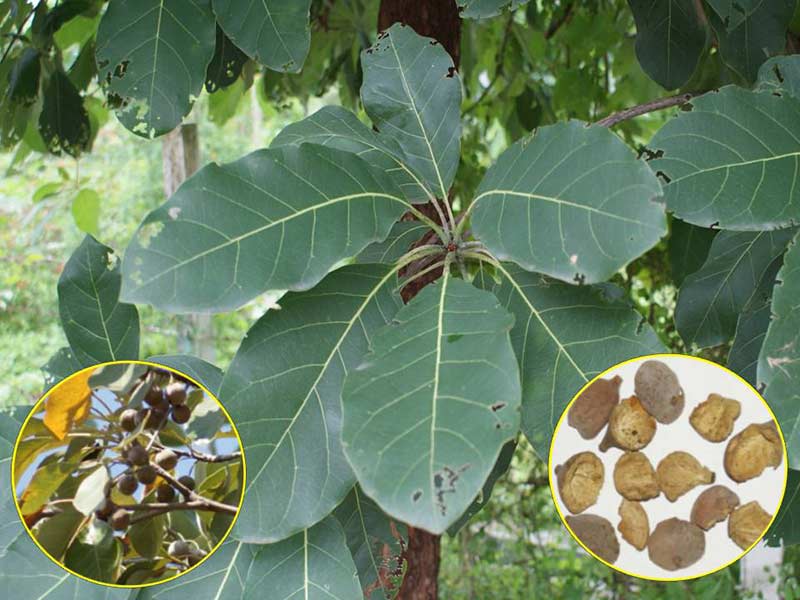
Phyllanthus emblica L.), 4 fruits of Bohera (
Terminalia bellirica (Gaertn.) Roxb.) and 1 fruit of Horitoki (
Terminalia chebula Retz.), 1 teaspoon Rock salt and 1 teaspoon Black salt.
Preparation: Collect, wash, and crush all the plant parts together to prepare a paste. Mix the paste with both types of salt and prepare tablets from them.
Dosage/Application: Consume 1 tablet thrice a day till cure.
Ingredients' availability: The plants are available in nearby places. Other ingredients are available in the local market.
Suggested Reading(s):
Jayesh, K., Helen, L., Vysakh, A., Binil, E., & Latha, M. (2017).
In vivo toxicity evaluation of aqueous acetone extract of
Terminalia bellirica (Gaertn.) Roxb. fruit.
Regulatory Toxicology and Pharmacology, 86, 349-355.
Khare, C. P. (2008). Indian medicinal plants: an illustrated dictionary. Verlag, Berlin/Heidelberg: Springer Science & Business Media.
Kumar, B., Divakar, K., Tiwari, P., Salhan, M., & Goli, D. (2010). Evaluation of anti-diarrhoeal effect of aqueous and ethanolic extracts of fruit pulp of
Terminalia belerica in rats.
International Journal of Drug Development & Research, 2(4), 769-79.
Mehmood, M., Siddiqi, H., & Gilani, A. (2011). The
antidiarrheal and spasmolytic activities of Phyllanthus emblica are
mediated through dual blockade of muscarinic receptors and Ca2+ channels. Journal
of Ethnopharmacology, 133(2), 856-865.
Sheng, Z., Yan, X., Zhang, R., Ni, H., Cui, Y., Ge, J.,
& Shan, A. (2016). Assessment of the antidiarrhoeal properties of the
aqueous extract and its soluble fractions of Chebulae Fructus (Terminalia
chebula fruits). Pharmaceutical Biology, 54(9), 1847-1856.