Innovation Description
The traditional knowledge holder has suggested treatment for dysentery.
Disease symptoms: Blood in stool, mucus in stool, abdominal pain
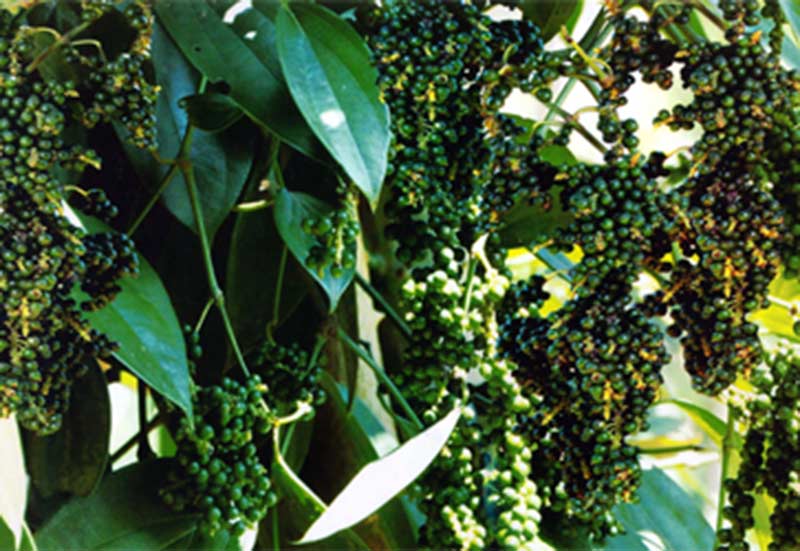
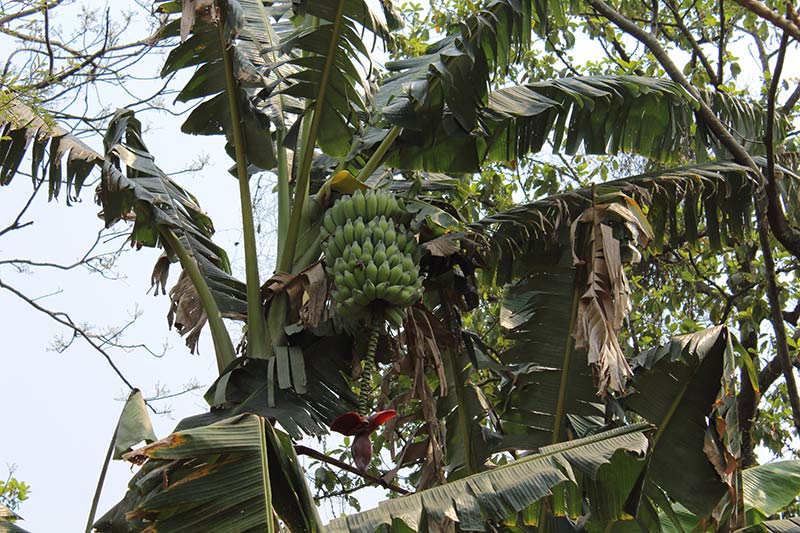
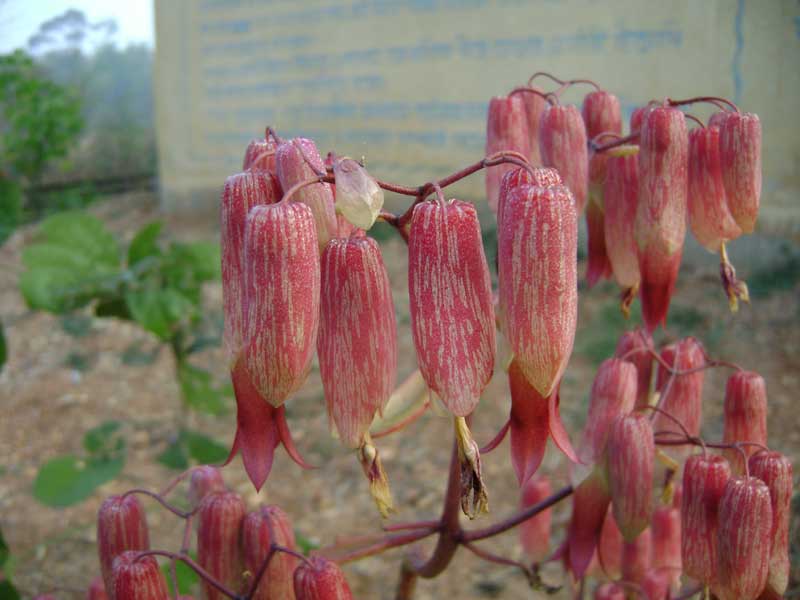
Ingredients: 50 g fresh leaves of Patharkuchi (Kalanchoe pinnata (Lam.) Pers.) , 20 ml stem sap of Atta kala (Musa × paradisiaca L.) and 20 g fruits of Golmorich (Piper nigrum L.)
Preparation: Grind all the plants part with some water to prepare paste.
Dosage/Application: Consume 1 spoon of paste thrice daily till cure.
Ingredients availability: The plants are available in nearby places.
Suggested Reading(s):
Abdallah, E., & Abdalla, W. (2018). Black
pepper fruit (Piper nigrum L.) as antibacterial agent: a mini-review. Journal
of Bacteriology & Mycology, 6(2), 141-145.
Gulcin, I. (2005). The antioxidant and radical scavenging activities of black
pepper (Piper nigrum) seeds. International Journal of Food Sciences
and Nutrition, 56(7), 491-499.
Khare, C. P. (2008). Indian medicinal plants: an
illustrated dictionary. Verlag, Berlin/Heidelberg: Springer Science &
Business Media.
Kusuma, S. A. F., Febrianti, M., & Saraswati, A.
(2018). Comparison of unripe banana peel of kepok (Musa paradisiaca L.)
and klutuk (Musa balbisiana colla): phytochemical and anti-dysenteries
activity. Journal of Pharmaceutical Sciences and Research, 10(4),
911-914.
Kusuma, S. A. F., Febriyanti, M., & Farzadillah, N.
(2018). Natural oral anti-dysentery from pseudostem of klutuk (Musa balbisiana
Colla) and kepok (Musa paradisiaca L.) banana plant from Indonesia. Journal
of Pharmaceutical Sciences and Research, 10(10), 2443-2447.
Shamkuwar, P., Shahi, S., & Jadhav, S. (2012). Evaluation of antidiarrhoeal
effect of black pepper (Piper nigrum L.). Asian Journal of Plant
Science and Research, 2(1), 48-53.